
• 12Sep

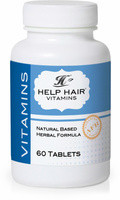
    Natural Hair SupplementsThe leading cause of male pattern baldness (which can also affect women) is believed to be the conversion of testosterone to dihydrotestosterone (called DHT). Fortunately, there are promising studies which conclude that the natural plant extracts saw palmetto and beta-sitosterol decrease DHT levels.

    Modern medications like minoxidil (Rogaine®) and finasteride (Propecia®) have been shown to inhibit the conversion of testosterone to DHT. But their reported side effects include fast heart rate, headaches, impotence, and decreased libido, as well as scalp irritation and unwanted facial hair in women.

    As a natural alternative to these medications, in a study published in The Journal of Alternative and Complementary Medicine in April 2002 (8:143–52), subjects with male pattern baldness were given either a placebo or a supplement containing 400 mg of a standardized extract of saw palmetto and 100 mg of beta-sitosterol per day. After about five months, hair growth in 60% of the men taking the herbal combination had improved.

    In another study published in The Prostate in Mar 6 2007 (Wadsworth, Worstell, Greenberg, Roselli), mice were given one of two doses of Saw Palmetto extract, either 50 mg/kilogram/day or 300mg/kilogram/day for 3 or 6 months. At the conclusion of the trial, the mice who had received the equivalent of 300mg/kilogram/day had significantly reduced amounts of dihydrotestosterone (DHT) in their prostate tissue. In addition, their prostate tumors had been reduced in size.

    Based on the above data, it seems that especially saw palmetto indeed does decrease DHT levels, if used persistently over a period of approximately 6 months. These findings are encouraging for millions of men and women with hair loss. Women of childbearing age are nevertheless warned not to use saw palmetto without medical supervision.

  • 11Jul

    MinoxidilMinoxidil 2% solution has been available since the late 1980s as a treatment for hair loss in both men and women. It is available over-the-counter (without prescription) as either a brand-name product (Rogaine ®) or in less expensive generic formulations. Minoxidil is applied topically-that is, applied directly to scalp skin where cessation of hair loss and stimulation of new hair growth is desired.

    When first introduced, Rogaine received a great deal of media attention as the first hair restoration medication approved by the Food and Drug Administration. Some media stories implied it was a “miracle drug”. Over time, Rogaine did not live up to “miracle drug” expectations and there was disappointment that results were often less than spectacular.

    What can be said about minoxidil after more than a decade of use as a hair restoration medication? It can fairly be said that minoxidil is moderately effective and can be helpful for some people with hair loss. A 5% solution of minoxidil recently became available and clinical investigators have reported it to be considerably more effective than the 2% solution in halting hair loss and stimulating new hair growth in both men and women. At all formulations, women have been shown to have a better response than men to topical minoxidil.

    Used as directed, 2% minoxidil has been shown to stimulate hair growth in about 30% of male patients, with a slightly higher rate in females. The response rate is improved with use of 5% solution.

    Topical minoxidil in either 2% or 5% solution is most effective in persons with recent onset of hair loss due to androgenetic alopecia and relatively small areas of hair loss. Minoxidil is less effective when hair loss is long-standing or large in area. Thus, early use of minoxidil is indicated to prevent progression of small areas of male or female pattern hair loss. Physician hair restoration specialists sometimes use minoxidil to slow hair loss in young patients, delaying hair transplantation for several years in order to conserve the supply of hair that will be needed later for transplantation.

    Minoxidil is often more effective in improving hair growth in central areas of the scalp than in frontal areas. It is often effectively used by physician hair restoration specialists to complement hair transplantation, contributing to an appearance of “fullness” in scalp hair.

    If minoxidil proves effective in halting hair loss and/or stimulating new hair growth, its use becomes a lifetime commitment. If regular application of minoxidil is halted, all results of therapy will be rapidly lost over the next 3 to 6 months.

    Side effects of topical minoxidil are few and generally minor skin irritation or itching. A potential complication of minoxidil use is the unwanted growth of facial hair if the minoxidil solution is accidentally spilled or applied to facial skin.

    How Does Minoxidil Work?

    Why does minoxidil halt hair loss and stimulate new hair growth? No one knows for sure, but there are some good assumptions.

    The hair-restoration properties of minoxidil were an accidental discovery. Minoxidil was developed first as an anti-hypertensive-a drug designed to lower blood pressure by vasodilation (dilating blood vessels). But minoxidil also turned out to have an effect on the structure and cellular activity of hair follicles, and on the growth rate of hair. Is the vasodilating effect of minoxidil associated with its effect on hair follicles? No one can say for sure. It also is not known why the effects of minoxidil on hair follicles varies from person to person-no effect in some people, substantial effect in others. Since the cause of the hair follicle effects are not understood, they cannot be predicted and no one can say in advance who will benefit from minoxidil therapy and who will not.

    “We have seen plenty of patients use minoxidil in our Boca hair transplant clinic and Miami  hair transplant clinic,” said Dr. Lawrence Shapiro. “However, even with regular use  of Minoxidil, the hair will still shrink and fall out, but at a slower pace.”

    Source: http://www.ishrs.org/nonsurgical/options-rogaine.htm

  • 11Jul

    Two new studies of the effects of 5% minoxidil in treating male-pattern hair loss report that a majority of patients found:

    • rapid onset of action in promoting new hair regrowth;
    • very effective to effective results in promoting new hair regrowth over the period of treatment,
    • decreased hair loss; and,
    • minimal side effects.

    Minoxidil is a topical hair restoration agent that is marketed in the U.S. under the brand name Rogaine®. [Ed. Note: It is also available in less expensive generic formulations. It is available in 2% and 5% minoxidil solutions; the 5% minoxidil solution is approved for use only by men in the U.S.

    Results of the minoxidil studies were evaluated by both men and women patients and physicians; in one of the studies, physicians with male-pattern hair loss were included in the study population.

    Both minoxidil studies were conducted by physician investigators in Germany under post-marketing conditions. The studies were funded by Pfizer Group, the maker of Rogaine®.

    What Is a Post-Marketing Study?

    Post-marketing studies (Phase IV studies) are studies that pharmaceutical firms are required to conduct after a drug has been approved and has been in use by patients.

    Phase I, II and III clinical trials evaluate the safety and efficacy of drugs for their intended use. Phase I and II clinical trials include laboratory and animal studies; Phase III clinical trials are conducted in patients. Phase III clinical trials are randomized, placebo-controlled studies involving up to several thousand patients over a designated period of time. If the drug is approved and goes into distribution with advertising and marketing, it will eventually be used by thousands of patients, depending on the type and purpose of the drug.

    Post-marketing surveillance studies are carried out to monitor safety and efficacy. The FDA points out that Phase IV post-marketing surveillance has particular value because:

    • Phase III clinical trials are one-time events conducted with a limited number of patients; as the number of patients using the drug increases, so does the possibility of safety and efficacy issues not detected in the Phase III trials.
    • Over time, the drug in question may be used in types of patients not included in the Phase III trials.
    • Post-marketing surveillance may detect rare safety or efficacy events that are unlikely to be detected in the limited Phase III patient population, but may be detected in an expanded number of patients.

    Pharmaceutical firms also may use positive data from post-marketing studies to strengthen advertising and marketing claims.

    Minoxidil Approval

    The topical hair restoration agent minoxidil has been approved for use in treating male-pattern hair loss for more than 15 years. Available first as a 2% minoxidil solution, it has more recently been approved for use in 5% minoxidil solution. In the U.S., the 5% solution is approved for use only in men; the 2% minoxidil solution is also approved for use in treating hair loss in women. The 5% solution has been generally found to be more effective than the 2% solution in treatment of pattern hair loss.

    Minoxidil Study Results

    The two post-marketing studies of 5% minoxidil were reported at the 62nd Annual Meeting of the American Academy of Dermatology, February 6-11, 2004, Washington, DC.

    One-Year Observational Study

    Dermatologists conducted a 1-year observational study of minoxidil use in 984 men with male-pattern hair loss. The study evaluated the effectiveness of a 5% minoxidil topical solution in halting hair loss and stimulating new hair growth, as well as the patients’ perceptions of efficacy and side effects. Over the 1-year period of the study, patients applied 1 milliliter (ml) of 5% minoxidil solution twice day to hair-loss areas of the scalp. Every 3 months during the study, patients collected hair lost in a hair washing and sent the collected hair to a laboratory for counting.

    Results at the end of 1 year:

    • The dermatologist investigators reported that hair loss areas of the scalp had become smaller in 62% of the patients using minoxidil, unchanged in 35.1% and larger in 2.9%.
    • In evaluating minoxidil effectiveness in stimulating hair regrowth, the investigators found the 5% minoxidil solution very effective in 15.9% of patients, effective in 47.8%, moderately effective in 20.6% and ineffective in 15.7%.
    • Hairs lost during washing numbered a mean 69.7 at the beginning of the study, and a mean 33.8 at the end of the study-a measure of the effectiveness of 5% minoxidil in halting hair loss in the patients studied.
    • The mean score of patient satisfaction in minoxidil results on a scale of 0 (extremely dissatisfied) to 10 (very satisfied) increased from 2.9 at study beginning to 4.4 at study end. Patient satisfaction scores were lower than the estimates of the physician investigators: the investigators rated efficacy of treatment as good or very good 25% more often than did the patients.
    • Side effects, mostly dermatologic, were reported by 3.9% of patients in the study. None of the side effects was classified as serious.

    Four-Month Surveillance Study

    A 4-month surveillance study involving 743 men with male-pattern hair loss was designed to evaluate (1) how quickly men using 1 ml of 5% minoxidil solution twice a day began to notice reduced hair loss and/or new hair regrowth, (2) efficacy of 5% minoxidil solution in improving hair density in areas affected by male-pattern hair loss, and (3) side effects associated with use of 5% minoxidil solution.

    All results were evaluated and reported by the men involved in the study.

    At the end of 4 months:

    • The scalp area affected by male-pattern hair loss (the “balding” area) was judged smaller by 67.3% of the men, unchanged by 31.9% and larger by 0.8%.
    • The 5% minoxidil solution was judged very effective in stimulating new hair regrowth by 7.5% of the men, effective by 55%, moderately effective by 31.3% and ineffective by 6.2%.
    • Hair density (the “fullness” of scalp hair) was judged improved by 74.2% of the men, unchanged by 24.3% and worsened by 1.5%.
    • Of the 669 men who reported when results of minoxidil treatment were first noticeable, 13.9% reported results in the first month, 52.3% during the second month, and 33.8% during the third month.
    • Skin-related side effects were reported by 13 men and women.

    Results reported by the 150 physicians in the study did not differ substantially from results reported by the other men in the study.

    Results of these two post-marketing studies generally confirm results of previous studies of the efficacy and safety of minoxidil. While many persons are benefited by 2% or 5% minoxidil in treatment of pattern hair loss, results vary from person to person for a variety of reasons including individual responses to the agent and relentlessness of hair loss progression. Results that are satisfactory to some men and women are unsatisfactory to others, perhaps because results do not meet pre-treatment expectations.

    Best treatment results are likely to be realized when the person with hair loss consults a physician hair restoration specialist. Rational expectations for treatment outcome are most reliably based on (1) diagnosis of the cause of hair loss, (2) assessment of the characteristics of hair loss in the individual patient, and (3) a treatment plan based upon diagnosis and assessment, and agreed upon by the patient and physician hair restoration specialist. A physician hair restoration specialist is able to monitor the effectiveness of medical therapy clinically and through use of comparison photos, as well as provide other medical and surgical options to augment the benefits of minoxidil. Minoxidil solution is even more effective when combined with the oral medication finasteride (Propecia®), and is also compatible with hair restoration surgery. For example, a patient may have follicular unit transplantation to create a natural looking hairline near the front of the scalp, and use minoxidil and finasteride to preserve the hair on top of the scalp.

    Source: http://www.ishrs.org/articles/minoxidil-study.htm