
• 12Sep

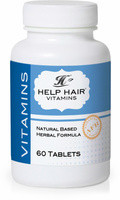
    Natural Hair SupplementsThe leading cause of male pattern baldness (which can also affect women) is believed to be the conversion of testosterone to dihydrotestosterone (called DHT). Fortunately, there are promising studies which conclude that the natural plant extracts saw palmetto and beta-sitosterol decrease DHT levels.

    Modern medications like minoxidil (Rogaine®) and finasteride (Propecia®) have been shown to inhibit the conversion of testosterone to DHT. But their reported side effects include fast heart rate, headaches, impotence, and decreased libido, as well as scalp irritation and unwanted facial hair in women.

    As a natural alternative to these medications, in a study published in The Journal of Alternative and Complementary Medicine in April 2002 (8:143–52), subjects with male pattern baldness were given either a placebo or a supplement containing 400 mg of a standardized extract of saw palmetto and 100 mg of beta-sitosterol per day. After about five months, hair growth in 60% of the men taking the herbal combination had improved.

    In another study published in The Prostate in Mar 6 2007 (Wadsworth, Worstell, Greenberg, Roselli), mice were given one of two doses of Saw Palmetto extract, either 50 mg/kilogram/day or 300mg/kilogram/day for 3 or 6 months. At the conclusion of the trial, the mice who had received the equivalent of 300mg/kilogram/day had significantly reduced amounts of dihydrotestosterone (DHT) in their prostate tissue. In addition, their prostate tumors had been reduced in size.

    Based on the above data, it seems that especially saw palmetto indeed does decrease DHT levels, if used persistently over a period of approximately 6 months. These findings are encouraging for millions of men and women with hair loss. Women of childbearing age are nevertheless warned not to use saw palmetto without medical supervision.

  • 31Aug

    healthy hair with PABAPABA, or para-aminobenzoic acid, is often used in supplements and products designed to help hair. Also known as vitamin B-5, PABA occurs naturally in foods such as liver, kidney, brewer’s yeast, eggs, molasses, and whole grains. Natural bacteria flora in the intestines also synthesize PABA.  Some health professionals do not consider PABA to be vitamin, but rather a B-complex factor, because PABA helps create folic acid in the body.

    PABA is a common ingredient in topically-applied sun screens.  Taking PABA supplements orally does not have any sunscreen effects.

    Red blood cell formation and the body’s manufacture of folic acid are partially thanks to PABA.  PABA improves the protein use in the body and also assists with the breakdown of protein. Proper functioning of these processes is important for healthy hair.

    A deficiency in PABA can result in tiredness, irritability, patchy areas on the skin, weeping eczema and more.

    Known as the “anti-grey hair vitamin,” research shows that PABA supplementation can improve hair health.

    A study on animals showed that insufficient dietary PABA resulted in grey hair. Their hair reverted to its original color when sufficient PABA was given. Grey-haired adults in another study experienced a 70% return to their original hair color when taking large doses of PABA each day.  This was a controlled study under medical supervision, because excessive doses of PABA can have side-effects.

    Typically, hair color can be restored with a B vitamin-rich diet. Even if color is not restored, the hair usually will have improved quality and growth strength.

    PABA is best taken with other vitamins, including the B group vitamins and folic acid. Dermatologist Larry Shapiro, a hair transplant specialist in South Florida, includes 30 mg of PABA, 6 mcg of vitamin B12 and 400 mcg of folic acid in each serving of Dr. Shapiro’s Help Hair Whey Protein Shake Formula, plus other hair-helping nutrients. “I designed my shake specifically to target the hair’s nutritional needs,” said Dr. Shapiro. “Today’s diet often does not have all the nutrients needed for healthy hair.”

    Sources:  Hair Science Institute, Wikipedia

  • 11Aug

    runningCholesterol lowering drugs such as statins can accelerate hair loss. Even drug companies admit to this. The possible reasons for this are: the lowering of hormones; the disruption of biological functions such as metabolism; and the distortion of the precise relationship of cholesterol and human hair needed for growth. Hormones are vital for hair growth and loss, so any imbalance can have far reaching consequences.
     
    Why is it that as you age, there is an inverse relationship between cholesterol and steroid hormones? As you age, cholesterol levels increase and many hormones decrease. Can there be a connection between this inverse relationship?

    The answer is yes, because as many steroid hormones decrease with age, your liver makes more cholesterol – the precursor to these hormones. One approach, instead of using statin drugs to lower cholesterol, is to use natural supplements to lower cholesterol, and use natural hormone replacement therapy to balance hormone levels. Natural hormone replacement therapy is determined by blood or saliva testing to customize the formula for your specific hormone needs. As hormone levels normalize, cholesterol levels will decrease correspondingly.
     
    Cholesterol is needed for the synthesis of all steroid hormones such as: gluco-corticoids (blood sugar regulation), mineral-corticoids (mineral balance and blood pressure regulation), sex hormones (many functions), and is a precursor to pregnenolone – the master hormone. DHEA is another hormone vital for cardiovascular health

    Cholesterol is vital for proper nerve functioning, brain functioning, shoring up damaged tissues, supporting cells, and maintaining good immunity. Statin drugs decrease the liver’s ability to make cholesterol by inhibiting HMG CoA reductase – the enzyme needed to also make CoQ10, which is needed to keep your heart and muscles strong.

    The heart is a muscle and needs testosterone, but this is inhibited by statin drugs. Some patients on statin drugs have developed cardiomyopathy, a weak heart that is not able to work sufficiently for the needs of the body. Another possible side-effect of statin drugs is rhabdomyolysis, which is extreme muscle cell inflammation with rupture of the cell wall.

    Your heart and the muscles need testosterone for proper functioning. Testosterone is needed to lower cholesterol as well as balance blood glucose levels by maintaining muscle mass. The more muscle and less fat a person has, the better insulin receptor site binding, which helps prevent Type II diabetes. The more stable the glucose levels, the lower the triglycerides will be and this keeps cholesterol levels down. The proper level of testosterone is needed for hair growth. Your body works as a whole. Just because a drug suppresses a symptom, it does not mean the condition is healed.

    You can manage your cholesterol levels naturally, increase your hormones naturally, and both of these will do your hair good.

    References:
    Long term benefits of testosterone replacement therapy on angina threshold and atheroma in men study by Mathur, Malkin, Saeed, Muthusamy, Jones and Channer.

    Harvey et al., Biochemistry: 3rd Edition, Baltimore: Lippincott, 2005, pp. 235-238.

    “Reduction of protein synthesis and statin-induced cardiomyocyte cell death.” Rabkin SW, Lodha P, Kong JY. Cardiovasc Toxicol. 2007;7(1):1-9.

  • 11Jul

    MinoxidilMinoxidil 2% solution has been available since the late 1980s as a treatment for hair loss in both men and women. It is available over-the-counter (without prescription) as either a brand-name product (Rogaine ®) or in less expensive generic formulations. Minoxidil is applied topically-that is, applied directly to scalp skin where cessation of hair loss and stimulation of new hair growth is desired.

    When first introduced, Rogaine received a great deal of media attention as the first hair restoration medication approved by the Food and Drug Administration. Some media stories implied it was a “miracle drug”. Over time, Rogaine did not live up to “miracle drug” expectations and there was disappointment that results were often less than spectacular.

    What can be said about minoxidil after more than a decade of use as a hair restoration medication? It can fairly be said that minoxidil is moderately effective and can be helpful for some people with hair loss. A 5% solution of minoxidil recently became available and clinical investigators have reported it to be considerably more effective than the 2% solution in halting hair loss and stimulating new hair growth in both men and women. At all formulations, women have been shown to have a better response than men to topical minoxidil.

    Used as directed, 2% minoxidil has been shown to stimulate hair growth in about 30% of male patients, with a slightly higher rate in females. The response rate is improved with use of 5% solution.

    Topical minoxidil in either 2% or 5% solution is most effective in persons with recent onset of hair loss due to androgenetic alopecia and relatively small areas of hair loss. Minoxidil is less effective when hair loss is long-standing or large in area. Thus, early use of minoxidil is indicated to prevent progression of small areas of male or female pattern hair loss. Physician hair restoration specialists sometimes use minoxidil to slow hair loss in young patients, delaying hair transplantation for several years in order to conserve the supply of hair that will be needed later for transplantation.

    Minoxidil is often more effective in improving hair growth in central areas of the scalp than in frontal areas. It is often effectively used by physician hair restoration specialists to complement hair transplantation, contributing to an appearance of “fullness” in scalp hair.

    If minoxidil proves effective in halting hair loss and/or stimulating new hair growth, its use becomes a lifetime commitment. If regular application of minoxidil is halted, all results of therapy will be rapidly lost over the next 3 to 6 months.

    Side effects of topical minoxidil are few and generally minor skin irritation or itching. A potential complication of minoxidil use is the unwanted growth of facial hair if the minoxidil solution is accidentally spilled or applied to facial skin.

    How Does Minoxidil Work?

    Why does minoxidil halt hair loss and stimulate new hair growth? No one knows for sure, but there are some good assumptions.

    The hair-restoration properties of minoxidil were an accidental discovery. Minoxidil was developed first as an anti-hypertensive-a drug designed to lower blood pressure by vasodilation (dilating blood vessels). But minoxidil also turned out to have an effect on the structure and cellular activity of hair follicles, and on the growth rate of hair. Is the vasodilating effect of minoxidil associated with its effect on hair follicles? No one can say for sure. It also is not known why the effects of minoxidil on hair follicles varies from person to person-no effect in some people, substantial effect in others. Since the cause of the hair follicle effects are not understood, they cannot be predicted and no one can say in advance who will benefit from minoxidil therapy and who will not.

    “We have seen plenty of patients use minoxidil in our Boca hair transplant clinic and Miami  hair transplant clinic,” said Dr. Lawrence Shapiro. “However, even with regular use  of Minoxidil, the hair will still shrink and fall out, but at a slower pace.”

    Source: http://www.ishrs.org/nonsurgical/options-rogaine.htm